Home Authors Posts by Editor

Editor

Editor
345 POSTS 1 COMMENTS

Swiss Design Meets Chinese Craft in “The Power of Hands”

0
Swiss Design Meets Chinese Craft in “The Power of Hands”
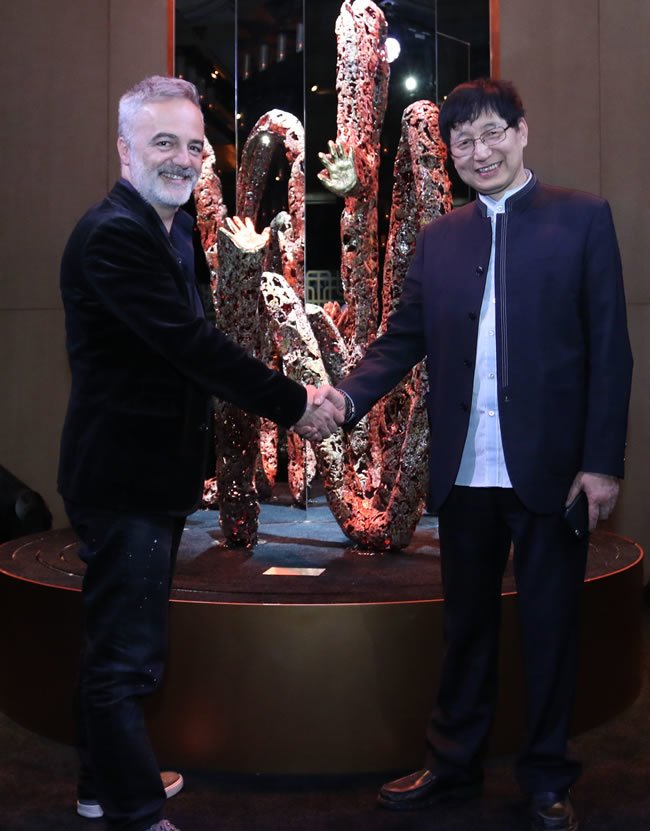
The two-meter-tall work of art, named “The Power of Hands”, showcases the joint creativity of Mr. Claudio Colucci, renowned designer from Switzerland, and Mr. Zhu Bingren, the great master of bronze craft from China. The two artists were brought together in this unique collaboration by Museum of Art & History, Geneva and Manufacture Vacheron Constantin, which has consistently enhanced the beauty of watchmaking creations through artistic crafts throughout its 260 years of uninterrupted history. The bronze sculpture depicts two hands in movement and captures the gesture of crafting. It praises the hand power in transforming a material into beautiful objects. The “two hands” also symbolize a tribute to the 65th anniversary of the bilateral relations between Switzerland and the People’s Republic of China. The unveiling ceremony of the bronze sculpture took place during the opening event of “Geneva at the Heart of Time – The Origin of Swiss Watchmaking Culture” exhibition, where artistic craft is also one of the key highlights.


The process of creating “The Power of Hands” took close to one year to complete. Based on Mr. Colucci’s design, Mr. Zhu Bingren realized the tribute to craft by casting melting bronze with coloring process using heptyl. The two hands that the bronze sculpture depicts also bear the palm prints of the two artists, representing artists’ resolution of passing on craftsmen’s skills and know-how, and also of weaving through the Swiss and Chinese cultures and values.
“Vacheron Constantin is very proud to have brought together these two exceptional artists from Switzerland and China who not only understand the importance of craft in art and in culture but also put great significance of passing on the skills and know-how into their own careers and works,” said Mr. Juan-Carlos Torres, CEO of Vacheron Constantin. “Mr. Zhu Bingren, as the fourth generation of the bronze craftsman in his family, with his own son being the fifth, in particular resonates with what Vacheron Constantin has treasured since its founding in 1755 – the passing on of traditions and know-how.” This tradition, perpetuated by Vacheron Constantin since its founding in 1755, gives rise to authentic works of art representing exceptional combinations of artistic crafts, from the movement all the way through to the dial. Above and beyond the technical prowess they enshrine, these creations celebrate an artistic vision of time and tell of stories inspired by arts and cultures from around the world.


Mr. Jean-Yves Marin, Director of Museum of Art and History, Geneva, said, “Together with Vacheron Constantin, we are very glad to gift ‘The Power of Hands’ to Capital Museum, China, as a commemoration of our shared passion on craftsmanship and heritage, which is also showcased at ‘Geneva at the Heart of Time – The Origin of Swiss Watchmaking Culture’ exhibition. By presenting this art piece, we would like to express our gratitude to Capital Museum, China,as well as contributions on cultural preservation and exchange for Swizerland and China.”
Mr. Colucci said, “Throughout mankind’s history, the hand itself has been the most beautiful tool of ours, especially for the craftsmen. Its power manifests through gestures that matures in a long process of learning from master to apprentice. The sculpture that Mr. Zhu Bingren and I created aims to capture this invisible trace of inheritance.”
As for bronze sculpture’s role in realizing Mr. Colucci’s design concept, Mr. Zhu added, “I love bronze’s tenacity and tenderness, which I borrows to express my passion for life and nature. I consider bronze as the protagonist of my handicraft ‘theater’, whose performance is often charismatic and unrepeatable. Audience is invited into a one of a kind experience with each individual creation.”
Pioneer in the spirit of Haute Horlogerie, Vacheron Constantin, the world’s oldest watch manufacture since 1755, has a long-standing heritage in art and culture with a strong dedication to excellence and commitment to artistic creativity. The corporate philosophy of the company has been that by sharing and passing on knowledge and know-how, a collective pool of expertise and experience will be created to perfect for the best. This philosophy is demonstrated by Vacheron Constantin’s numerous art and culture partnership programs and the masterpieces that the Manufacture Vacheron Constantin creates. The Master Artisans of the Manufacture are artists by nature, endowed with the unique gift of creating emotions. Passed on from generation to generation, from Master to apprentice, their expertise has shaped a collective memory.
About Museum of Art & History, Geneva
Opened in October 1910 in the old city, Museum of Art & History, Geneva, is one of the biggest pluridisciplinary museums of Switzerland.
While the building was designed by Marc Camoletti an architect son of the city, whose architecture is typical for the “Beaux-Arts style” en vogue at the time in France, its collections largely date back to the musée Rath, one of the first art museums in Europe, which opened 1826.
However, the aim of the “Grand musée” of 1910 was to reunite the city’s collections of applied art, archeology and fine arts within one institution. Since before, horology and enamels were famous around Europe as one of the most important and interesting public collection.
Separated in view to be presented in a thematic museum known as Musée de l’horlogerie et de l’émaillerie de Genève (1972-2002), the impressive collections of clocks and watches, enamels, jewels and miniatures, join back the main building in 2010.
With masterpieces, precious various objects and also studies items created both by the outstanding local industry and by abroad artists, the Geneva’s collection of horology proposes a look at the trades and art crafts practised in the Geneva Fabrique (manufactory) especially between 17th and 19th century.
In a region which saw the historical birth of watchmaking, it allows to understand horology in an international context that testifies to the art of timekeeping that was developed in Europe from the 16th to the 21st century.
Although Geneva is at the heart of the collections, the works are placed in an international context that testifies to the art of timekeeping that was developed in Europe from the 16th to the 20th century, and of which the Museum’s collection provides an abundant and high-quality reflection.
From the cabinotier himself to the atelier he toiled in, viewers can follow the evolution of Geneva’s watchmakers, engravers, rose engine turners, chasers and enamellers; they can admire the enamelled watches and jewels that were the Fabrique’s speciality, appreciate the timepieces decorated in the Oriental style, contemplate miniature masterpieces, and understand the close ties maintained between the Fabrique artisans and the renowned portraitists that were honoured in the courts of Europe.
The world of the Fabrique is not just evoked or reconstituted: it lives on, in a space where the watchmaker’s workbench, the jeweller’s atelier and the enameller’s abandoned paintbrush belong to Geneva’s collective memory.
Museum of Art & History, Geneva, shall temporarily close its doors at the end of 2015, as it plans a vast renovation and extension of its historical building, under the direction of the famous French architect Jean Nouvel, in order to fit the expectations of the visitors of the 21st century.
https://institutions.ville-geneve.ch/fr/mah/ ,
Nisn15B-Vacheron-Constantin-Museum-of-Art-and-History-jewelleryistanbul
About Vacheron Constantin 
Founded in Geneva in 1755, Vacheron Constantin is the world’s oldest watch manufacturer engaged in uninterrupted activity for 260 years. Founders of the very spirit of the technical and precious Fine Watchmaking, the men and women of Vacheron Constantin continue to design, develop and produce exceptional timepieces true to the brand’s three fundaments: perfectly mastered techniques, inspired and harmonious aesthetics, and an extremely high level of finishing. 
Pursuing its longstanding ties with the world of art and culture, Vacheron Constantin is committed to fostering Artistic Crafts that play such a key role in contemporary creativity, while highlighting the excellence achieved by combining these talents with those of Design. 
Its support to the vibrant life force of creativity is notably illustrated through fostering the international influence and ensuring the longevity of the artistic crafts, which could indeed not survive without this determination to promote their transmission. A transmission that is exercised on a daily basis within the Manufacture, notably between master-watchmaker and apprentice, thereby perpetuating the tradition of sharing cultivated within the Maison for the past generations. 
About Vacheron Constantin’s Heritage Collection 
The Vacheron Constantin’s Heritage Collection is evidence of the age-old Geneva watchmaking history through the prism of the world’s oldest watch manufacturer uninterrupted history for 260 years since it was founded in Geneva in 1755. Regrouping over 3,000 objects including 1,300 timepieces, 700 antique tooling as well as antique workshop furniture and paintings. Preciously guarded in Geneva the collection of timepieces was little by little compiled following many requests made to Vacheron Constantin to represent Geneva and Swiss watchmaking savoir-faire during Universal, International and National exhibitions that took place during the second half of the 19th century. Finally after the 1906 Milan National Exhibition, Vacheron Constantin decided to formally create its Heritage Collection. Pieces of the Vacheron Heritage Collection were exhibited in various museums around the world among which the MUDAC in Lausanne, Switzerland, the Art & History Museum of Geneva, Switzerland, and the Singapore National Museum just to name a few. The Vacheron Constantin Heritage Collection shows the historical evolution of both the technological, aesthetical and craftsmanship aspect of Genevan Haute Horlogerie. 
Founders of the very spirit of the technical and precious Fine Watchmaking, the men and women of Vacheron Constantin continue to design, develop and produce exceptional timepieces true to the Maison’s three fundaments: perfectly mastered techniques, inspired and harmonious aesthetics, and an extremely high level of finishing. 
Pursuing its longstanding ties with the world of art and culture, Vacheron Constantin is committed to fostering Artistic Crafts that play such a key role in contemporary creativity, while highlighting the excellence achieved by combining these talents with those of Design. 
Its support to the vibrant life force of creativity is notably illustrated through fostering the international influence and ensuring the longevity of the artistic crafts, which could indeed not survive without this determination to promote their transmission. A transmission that is exercised on a daily basis within the Manufacture, notably between master-watchmaker and apprentice, thereby perpetuating the tradition of sharing cultivated within the Maison for the past generations. 
www.vacheron-constantin.com
Mr. Claudio Colucci’s Profile 
Born in 1965 in Locarno to an Austrian mother and an Italian father, Claudio Colucci has made mixing and movement characteristics of his work. “Travel, the interaction of movement has made me a partner of the in-between, an author of transition from one thing to another, from one world to another”, he acknowledged between flights. 
As soon as he qualified in Graphic Design from the School of Decorative Arts in Geneva, he went straight to Paris where he studied Industrial Design at ENSCI-Les Ateliers, he then completed his training with an exchange to Kingston Polytechnic. Several trips and meetings later, it was his love for Tokyo and his first collaboration with IDÉE that was decisive. From then on he hasn’t ceased to have links in Switzerland, France and Japan. 
A minimal, dynamic and colorful style is at the root of his work, the outcome of his initial training in graphic design where he tended towards a polymorphous and global design. It is a real style that vibrates with interacting influences. Today as a designer, scenographer, interior architect Claudio is an excellent all-rounder. 

Man’s Jewelry Watch

0
Jewelry Watch
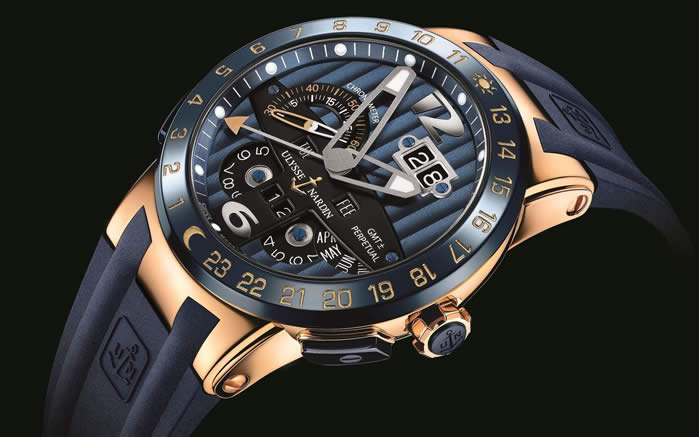
Watch has become a style symbol more than being a neccessity in daily life. There are differential pricing in watches according to their type, technology and also material. Let us explain why there are such price differences in watches which are symbol of elegance and style.
First of all we will give information about what materials are used to make the glass of watches. Some of the materials used in watch glasses are:
– Mineral
– Sapphire
– Mica
– Crystal


There are many other factors which defines the price of a watch. One of them is glass the other one is frame. We can say that the most important part of a watch is frame because all the mechanical parts and the battery are in it.


The materials used in the frame that has an important role while defining the prize of a watch is very important. You can even decide the type of the watch that you will buy according to the quality of the frame. That is of course due to your taste and the conditions in which you are going to wear your watch. So what materials are used in watch frames? The answer is: Steel, plastic, metal, ion plating, aluminium, silicon, ceramic, polycarbonate, gold plating, gold, silver, silver plating, titanium, ion and copper.
Mrt15B-Man-s-Jewelry-Watch-jewelleryistanbul
If we come to the watch band many different kind of bands are available.
As we mentioned before that list can be longer but we want to make it shorter. The material of the band is also directly proportional to its strength. The break off a band is an incident which we never want so we should be careful about its strength.
Apart from these the extra properties that your watch has like whether it is analog or digital if it has a chronometer or calendar has additional effect on the price.
The most important thing you should take into consideration while purchasing a watch is to buy it from a safe store. There are so many types that look like original but never reach the same quality or durability. You don’t want to buy one of these by mistake and have trouble so that you should always prefer original products and buy them from reliable internet sites or stores.

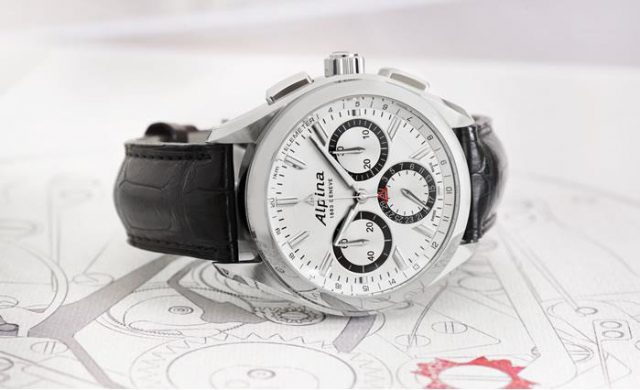
A Milestone in Alpina s History The Alpiner 4 Flyback Chronograph with the new Manufacture Calibre AL 760

0
A Milestone in Alpina s History The Alpiner 4 Flyback Chronograph
Alpina is no stranger to the chronograph. The traditional Swiss company has been familiar with pocket-watches and wristwatches endowed with an additional stop function for over a hundred years. Nevertheless – and in this respect, there is no difference between Alpina and other renowned Manufactures – the movements ticking away inside the cases were always bought in. Suppliers included Landeron, Minerva and Valjoux. Without exception, they all supplied movement blanks with a guarantee of quality, precision and reliability of operation. The fine finishing of the components, assembly, casing up and final checks were of course all carried out in our own workshops. In this way, the watchmakers gained a wealth of expertise in the demanding field of mechanical timekeeping.
So working together with established experts was no accident. For every watch brand, chronograph calibres represent an immense opportunity that poses a real challenge.


Chronographs of all kinds are generally based on perfectly standard watch movements, notably in a Lépine design with a small-seconds hand opposite the winding and setting crown. On wristwatches, this hand appears in a subdial at 9 o’clock. Watchmakers can mount this sophisticated mechanism, which enables time intervals to be measured without stopping the main movement, immediately under the dial or at the back of the watch. The position chosen has no influence on the stop function. Traditionally, the industry recognises two different modes of construction of a chronograph mechanism: integral and modular, fixed to the watch movement. The latter has the advantage of offering greater flexibility, as it can be fitted, after appropriate adaptation, to a wide variety of hand-wound and automatic calibres. Furthermore, the chronograph assembly can be pre-mounted and tested independently of the “power unit” used, and if necessary even completely replaced. This saves time and hence also costs.
The New Manufacture Calibre AL-760
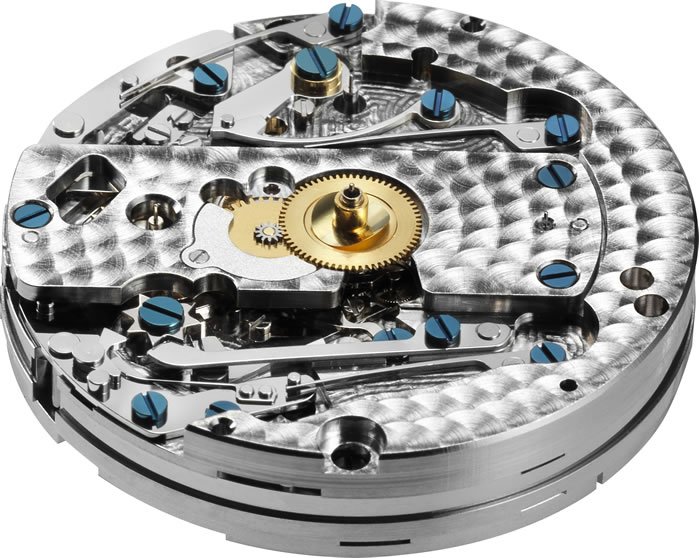
And now the spotlight is once more on Alpina. After an eventful 132-year history, the Manufacture is presenting the first chronograph developed and produced in-house. Over three years went by in the Swiss mountains between the initial concept and readiness for production. For the good reasons mentioned earlier, the technicians decided to adopt a modular construction for the new calibre AL-760. This step permitted the use of the reliable and robust, tried and tested AL-710 rotor calibre with a balance frequency of 4 Hertz, centre seconds and a date hand at 6 o’clock.
This powerful movement, comprising 233 components (on which only 96 components for the flyback module) with a rotor operating in both directions and a 38-hour power reserve, is particularly suitable for a drive mounted at the front, immediately below the under-dial work. The ingenious construction of the chronograph mechanism is apparent not least from the fact that Alpina was able to create it from only 95 parts. Critically minded contemporaries may suggest at this point that such a small number of parts must imply loss of quality. This is by no means the case. On the contrary, the development team acted in accordance with a wise saying from Antoine de Saint Éxupéry: “Perfection is attained, not when there is no longer anything to add, but when there is no longer anything to take away.” As an adventurous pilot, the French poet knew what he was talking about. In the particular case of a highly complex chronograph mechanism, in which the assemblies have to work together to perfection, keeping to the vital minimum really makes sense. And it adheres to the dictum that nothing can break down and fail if it is not there in the first place!


Actuating the chronograph push-piece above the crown for the first time demonstrates how thoroughly the functional relationships have been thought through. Protection against errors of manipulation is clearly perceptible in the resistance felt on starting. Nevertheless, the pressing action is extremely smooth. Of course, the same is true of the subsequent stopping and resetting operations.
An unmistakeable characteristic of high-quality chronographs is a column wheel rotating on bearings to control the three start, stop and reset functions. In conventional mechanisms, this component has several columns. In contrast, the calibre AL-760 has no standard-type column wheel, but a star-shaped one. Together with the operating lever, which is controlled by the start/stop push-piece, this component is responsible for the exceptionally smooth operation of the mechanism.
The absolutely essential part in all chronographs is the clutch. Its function is to establish the connection between the power source, that is the watch movement, and the gearing, or under-dial work, when required. To achieve this end, watchmakers are acquainted with three different designs: the classic horizontal wheel coupling, the oscillating pinion, also traditional, and lastly the modern vertical friction clutch. Symbolic of the ingenuity of the AL-760’s designers is a new type of swivelling component with two toothed pinions. When the button is pressed, it connects the two “storeys” together. At the lower level, in the watch movement proper, it takes up the rotation of the centre seconds and conveys this, via the corresponding upper component, to the actuating mechanism to turn the chronograph hands. At the same time, the lower central seconds also drives the seconds hand at 9 o’clock, which turns continuously in unison. The rotations of the chronograph hand are “recorded” by the 30-minute counter at 3 o’clock.
Repeating pressing of the start/stop push-piece causes slight pivoting of the clutch lever. The chronograph stops. At the same moment, for perfect legibility, a small locking lever ensures that the two stopping hands pause exactly at the last position chosen. If desired, this stop operation can be repeated as often as wished with the upper push-piece. This is known to specialists as a cumulative split.
The chronograph will not be reset to zero until the push-piece at 4 o’clock is actuated. Here again, the ingeniously contrived construction of this newcomer among chronographs is evident.
Mrt15B-A-Milestone-in-Alpinas-History-The-Alpiner-4-Flyback-Chronograph-jewelleryistanbul
THE DIRECT “IN-LINE” FLYBACK FUNCTION
As a recognized specialist in pilots’ watches, Alpina equipped the calibre AL-760 with a split-seconds function. Also known by the name of “flyback”, this function was invented in the 1930s to make it easier for pilots to use this most essential of instruments. With this function, pressing the push-piece just once starts the timer again from zero. In this case, the push-piece at 4 o’clock and its associated mechanism cause three tasks to be performed very quickly one after the other: first, the clutch is disengaged; secondly, the chronograph is reset to zero by means of the single-piece hammer, whose sloping surfaces turn the two zero reset hearts so that the hands position themselves vertically again; and thirdly, the clutch engages once more as soon as the push-piece is released. The highly complex sequence of movements involved in this case proceeds directly from the push-piece to the clutch lever. This instant type of flyback is another instance of the unique details of construction of the new calibre AL-760.
And last, but not least noteworthy, are the carefully designed shape and the mode of attachment, not by a force-fit method, of the chronograph module to the basic watch movement. It achieves a reliable and, above all, energy-saving connection between the two mechanisms, both of them produced in-house.
And to conclude, the very legible date hand at 6 o’clock avoids the unsightly well through which the date disc rotating on the front of the basic movement must be read on modular chronographs of conventional construction.
More Than the Sum of Its Parts
Ultimately, a fantastic new watch movement can only be as good as the sum total of case, dial, hands and wristlet. This was true back in 1938, when the “Alpina 4” sports watch stopped the show. And with good reason. The figure “4” symbolised four decisive characteristics at once:
1st – antimagnetic
2nd – water-resistant “Geneva” case
3rd – Incabloc shock protection, and
4th – the use of non-rusting stainless steel for the highly robust case.
All this and much more goes to make up the new “Alpiner 4 Chronograph Flyback”. Its sportily elegant stainless steel case with ergonomically shaped chronograph push-pieces, screw-down winding and setting crown, and scratch-resistant sapphire crystal measures 45 millimetres in diameter. It can withstand a water pressure of up to 10 atmospheres, equivalent to a diving depth of 100 metres. Following a long tradition, the screwed steel case back is decorated with the familiar Alpina logo. Looking at the right-hand side of the case, connoisseurs will immediately notice that the crown and push-piece lie on a straight line, despite the calibre AL-760’s modular construction.
Safety and comfort on the wrist are ensured by either a sporty stainless steel link bracelet or an elegant strap in precious alligator.
The designers configured the dial and hands with optimum legibility under all circumstances in mind. Super-LumiNova highlights facilitate use of the watch after dark.
This is the moment to show the fact sheet:
The “Alpiner 4 Chronograph Flyback” in Brief
At Baselworld 2015, the Alpina watch Manufacture, founded in 1883, launched its first automatic chronograph produced in-house.      With the new automatic calibre AL-760, the technicians made the considered choice of a modular mode of construction based on the tried and tested AL-710 with a winding rotor operating in both directions. The control mechanism of the front-mounted chronograph is  distinguished by its ingenious construction, which achieves the highest degree of functionality with only 96 components. And it adheres to the dictum that nothing can break down and fail if it is not there in the first place! Special features of the new chronograph include a directly actuated flyback function. With this useful function, the 8th-second chronograph can be stopped and restarted from zero by pressing the push-piece just once. A counter at 3 o’clock adds cumulative times up to 30 minutes. Opposite, at 9 o’clock, the permanent-seconds hand rotates as usual. And incorporated into the Super-LumiNova-highlighted dial with the utmost harmony, the date hand is positioned at 6 o’clock. Of course, Alpina also made the hands luminous at night.
The AL-760 movement beats at a frequency of 4 Hertz in its large stainless steel case, reminiscent of the legendary “Alpina 4” of 1938. The screwed case back bears the well-known Alpina logo. The wristwatch, available with a stainless steel bracelet or alligator strap, is water-resistant to a pressure of ten atmospheres.
Mrt15C-A-Milestone-in-Alpinas-History-The-Alpiner-4-Flyback-Chronograph-jewelleryistanbul
About Alpina
ALPINA, THE ORIGINAL SWISS SPORT WATCH
ALPINE SPORTS WATCH MANUFACTURING – SINCE 1883
Alpina, famous for its red triangle signature, is an independent, family-owned fine watchmaking manufacture based in Geneva, Switzerland. Founded in 1883, Alpina’s watchmaking history spans more than 130 years.  A true pioneer of the Swiss watchmaking industry, Alpina has been the source of numerous innovations, patents and calibers. Alpina invented the concept of the sport watch, as we know it today, with the birth of its legendary Alpina 4 in 1938.
Faithful to its long tradition of creating mechanical calibers, Alpina manufactures, in its Geneva-based Manufacture, four in-house movements in-house: the Tourbillon AL-980, the World Timer AL-718, the Automatic Regulator AL-950 and the Small Date Automatic AL-710.
Alpina’s mission is to design and engineer luxury sport watches that operate with the greatest precision and reliability possible in the most demanding sporting environments, like the Alps.

Ateliers deMonaco launches its Manufacture Flyback Chronograph Introducing the Admiral collection

0
Ateliers deMonaco
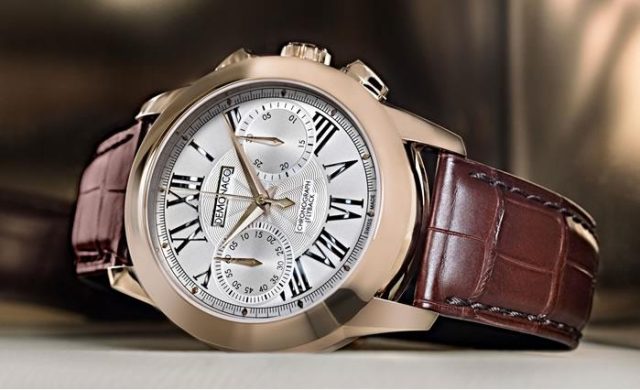
2015 will be the year in which Ateliers deMonaco (dMc) will start producing its own in-house flyback chronograph movements, adding yet another to our roster of in-house made movements and serving as the basis for the new released Admiral collection.


As per our innovation tradition of making complications work simpler and better, our patented manufacture flyback chronograph, which measures a succession of elapsed times, eliminates many superfluous repetitive operations. On ordinary chronographs, the buttons must be pressed three times in succession to measure successive intervals: once to stop the chronograph, once to reset it to zero, once to start again. With the flyback function, pressing the “flyback” button once stops timing the first interval and resets the hand to zero. The chronograph hand starts again the instant the button is released.


Return to zero mechanism
A pending patent for the ”Direct Return to Zero” mechanism :
this mechanism is unlike other chronographs directly actionned by the 4 o’clock pusher. The advantage of this mechanism is that it has a multi function Flyback Hammer. This Flyback Hammer is programmed to action the disengage the chronograph clutch wheel, engage the brake, turn the chronograph second and minute wheel.
The honorary title “Admiratus Admiratorum” (the most admired of the admired) was believed to have been given during the reign of the Norman ruler Roger II (1095–1154) to his naval commander George of Antioch. The word “admiral” has today come to be almost exclusively associated with the leading position in most of the world’s navies, equivalent to the army rank of General. Still today, appreciated by pilots for the time it saves, this complication is particularly admired for its use in navigation, racing and by commanders of any challenge alike!
Our Philosophy – deMonaco was founded in 2008 to let the next generation watchmakers create timepieces of exceptional quality, with the latest innovation and the rarest, most exquisite and robust materials; to go far beyond what was considered possible. Our dream is one of relentless reinvention and commitment to bring you the extraordinary: we call it Nouvelle Horlogerie! We do this not only by putting something truly exceptional on your wrist but also by ensuring your deMonaco timepiece is more than an object of desire, a true reflection of your individuality. What unites us with our clients is the belief that life is not only about luxury, but luxury sure is life!
The Admiral Chronograph is made in a limited edition of 88 pieces in each version (18Kt rose gold or 18Kt white gold).
Mrt15B-Ateliers-deMonaco-launches-its-Manufacture-Flyback-Chronograph-Introducing-the-Admiral-collection-jewelleryistanbul
For more information
Please contact betty@ateliers-demonaco.com, or visit us next March 19-26, 2015 at the Baselworld Fair, where we will be located in Hall 1.1, stand B79.

HUBLOT – Presenting the new BIG BANG FERRARI watches

0
hublot
Presenting the new BIG BANG FERRARI watches !
A fantastic third year of collaboration between Ferrari and Hublot is coming to an end.
Following the launch of the first two watches, the Big Bang Titanium and the Big Bang Magic Gold in 2012, the famous MP-05 LaFerrari – the only watch in the world with a 50-day power reserve – three Big Bang models in 2013, three Big Bang models in 2014, two new Big Bang Ferrari “racing” versions have now been unveiled.


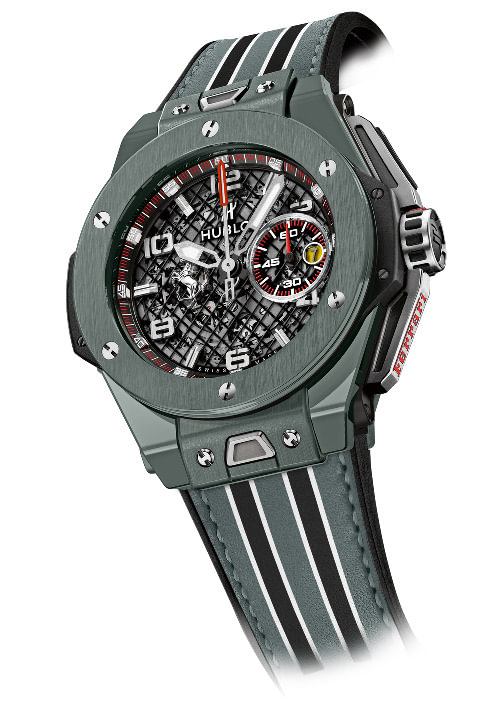
Exceptional sports watches in honour of exceptional racing cars. In 2015, to celebrate the 10th anniversary of the Big Bang, Hublot is unveiling two new models developed with Ferrari: the first is the aptly named Big Bang Ferrari Black Ceramic, which is adorned with details in Ferrari’s legendary red colour; the second is the Big Bang Ferrari Grey Ceramic, inspired by the historic NART (North America Racing Team) livery.
Constructed on a 45 mm diameter chassis in black or grey ceramic, the sporty design of the new Big Bang Ferrari models is enhanced by a profiled aerodynamic dial through which the depths of the movement can be glimpsed. The UNICO manufacture movement is dominated by the unique and distinctive Ferrari grille – a blackened criss-cross mesh which clearly reveals the main plates and bridges of the movement.
The dial features an appliqué of the iconic prancing horse at 9 o’clock, while the minute counter and date window appear at 3 o’clock in the colours of the Ferrari shield. The predominant colour on the strap also reflects the aesthetic of the dial, with indices and hands featuring a rhodium-plated finish for the grey ceramic and red varnish for the black ceramic. Recalling the distinctive codes of the five-spoke Ferrari wheels, the oscillating weight is visible beneath the transparent sapphire case-back.


The case middle incorporates elongated push-buttons in titanium and rubber, fixed to a rotating staff like the pedals of a car. The leather strap features a red or grey livery with “striping” reminiscent of that found on racing cars. It is equipped with the innovative “One click” attachment system inspired by car seat belts, making it easily interchangeable.
Clearly displaying its affiliation with the automotive world, the new Big Bang Ferrari is available in two versions – black or grey ceramic – each numbering 250 pieces. They both have a 72-hour power reserve.
Mrt15B-BIG-BANG-FERRARI-BLACK-GREY-CERAMIC-jewelleryistanbul
The UNICO movement is designed, developed, machined and assembled by the micro-mechanical engineers, engineers and watchmakers at Hublot. Other features: a practical flyback chronograph which can be reset at any time, and which is unique in the watchmaking industry, two push-buttons, with date indicator, and featuring a uniquely positioned mechanism with dual coupling and the famous “column wheel” visible on the dial side. Its development required a completely original approach and thinking outside the box: For example, the hour counter is driven directly by the barrel, and there is no jumper in the chronograph mechanism. This simplification boosts reliability and robustness. Its pallet fork and escapement wheel are fixed to a removable platform and are made from silicon, whose lightness provides a guarantee of performance. Its construction, which incorporates just 330 components, has been simplified as much as possible in order to further increase robustness. This result is the fruit of continual adjustments made since 2009, the year it was launched, which have been carried out jointly by the technical office, the laboratory and the after-sales service in the manufacture. Its frequency of 4 Hz/28,800 vibrations per hour and its immaculate finish are also a guarantee of high chronometric quality. Finally, its automated production, which includes automation of the machining, stone fitting, oiling and numerous assembly operations also ensures consistent, controlled quality. Its power reserve is around 72 hours.
Mrt15C-BIG-BANG-FERRARI-BLACK-GREY-CERAMIC-jewelleryistanbul
HUBLOT SA – Switzerland – www.hublot.com – T +41 (0)22 990 90 00 – F +41(0)22 990 90 29
International Press Contact: Anaïs Tréand – a.treand@hublot.ch

Mamuş Jewellery at Istanbul Jewelry Show

0
Mamuş Jewellery at Istanbul Jewelry Show - visit us at Istanbul

We kindly invite you to visit us at Istanbul Jewelry Show  between 12-15 March 2015 at  Hall 2  Booth 4R29-31

Mrt15C-mamus-jewelryistanbul-jewelleryistanbul

Mrt15B-mamus-jewelryistanbul-jewelleryistanbul

EDITORIAL

Our Social Media Accounts

3,687FansLike
36FollowersFollow
205FollowersFollow
858FollowersFollow
24SubscribersSubscribe

LATEST NEWS

Fashionable Gem stones

0
Whether or not you're on the lookout for an ideal present to your family members otherwise you merely need to add extra to your...